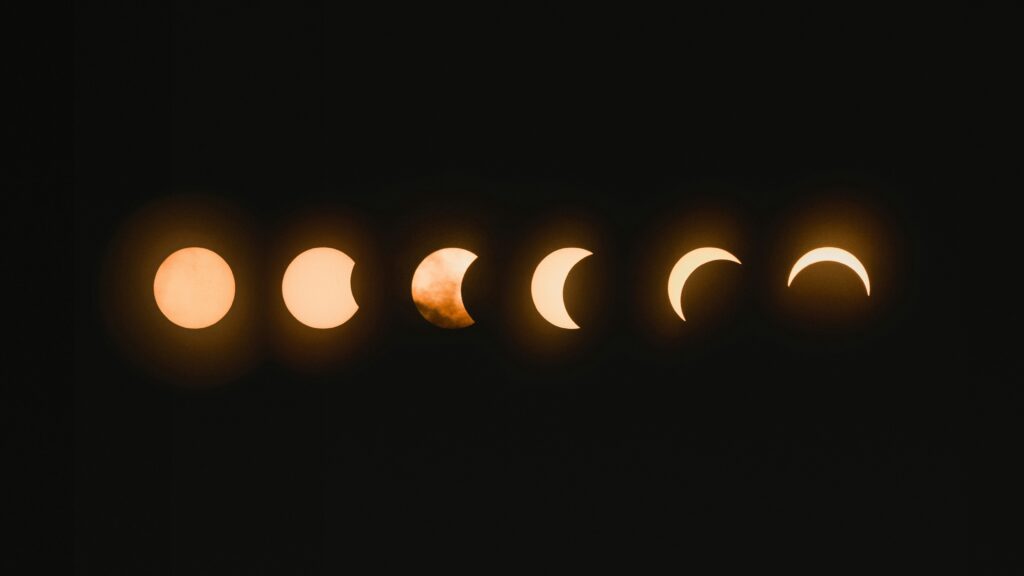
The winter solstice is upon us. The longest night awaits, with it’s annual invitation to reflect on the potency of darkness, and the way we can draw on this power to help us reimagine ourselves. Yes, by shining light on the dark places inside of us, but also by honouring the darkness that lives in us, giving it space to breathe and flow, understanding that it needs to have its day, and that this darkness is as much a part of human nature as it is a part of the seasonal cycle. It is an aspect of us that is wild and untameable and out of our control.
I don’t have much knowledge yet in grief.
At winter solstice, and during the long, dark winter months, we’re invited to explore a different rhythm to the one that our civilisation demands. Instead of continuing to surrender to the relentless patterns of achievement and productivity, we can consciously choose to embrace and descend into the darkness. If we do not choose this descent then, sooner or later, we will be pulled down unwillingly, falling into depression or numbness, waiting in a state of pain and tension for the light to return. Whether we experience it as a conscious choice or a demand that comes from somewhere out of our control, descent is hard. It works in opposition to the parts of us that yearn to find a way to transcend our pain.
We can get lost in the darkness. We can get lost inside our pain. In the darkness we need a guide, or at the very least, a companion. In The Book of Hours Rilke writes,
It’s possible I am pushing through solid rock
in flintlike layers, as the ore lies, alone;
I am such a long way in I see no way through,
and no space: everything is close to my face,
and everything close to my face is stone.I don’t have much knowledge yet in grief—
so this massive darkness makes me small.
You be the master: make yourself fierce, break in:
then your great transforming will happen to me,
and my great grief cry will happen to you.
The “you” that Rilke is referring to here is “God”. For Rilke, especially in The Book of Hours, God is not a distant, completed deity but rather an emerging presence that comes into being through human creative and spiritual struggle. The relationship is reciprocal: “Your great transforming will happen to me / My great grief cry will happen to you.” This mutuality is crucial – the speaker’s grief becomes God’s experience, just as God’s transforming power enters the speaker.
When we go into the darkness alone, without guidance or companionship, without the understanding that, on the other side of our journey of descent, the light WILL return, it often feels hopeless.
Perhaps this is the place you find yourself this winter. Perhaps this is where you have been stuck for many months or even years – lost in the darkness, alone, feeling stuck, losing hope, untethered from your connection to the part of yourself that KNOWS the way through, and from the companionship of others who have navigated this dark territory, and returned to tell the tale.
Tell me about despair. Yours, and I will tell you mine.
In this darkness hope, as hope diminishes, despair rises up. But this is a necessary despair. A loss of meaning and identity that heralds our entry into a cocoon-like state in which, if the conditions are right, we can transform. Often the ultimate hope we hold in our hearts, quietly and secretly nurturing, is that we will find a way to rise above it all, to reach a point in our lives – a final destination – where our suffering will cease. There is of course a deep truth here. We will all reach this final destination on the day of our death. Our longing for an end to our suffering is an unconscious – and entirely natural – desire to return to the source of it all, and find deep rest from the troubles of our lives.
What do we do in the meantime, before this final resting place is ready for us? Carl Jung famously wrote that “life is a luminous pause between two mysteries”. How do we take responsibility for the lives that we have been blessed with in order to live them fully, embracing both the light and darkness, the profound luminosity that the miracle of creation expresses and the inevitable shadows that this intense light generates?
There are many maps that provide guidance about how to live our lives well. Some of them are more complete than others. Those maps that do not define the territory of darkness and descent are woefully incomplete, but even the maps that ignore or condemn this sphere of life as hellish and wrong agree that community is an absolutely essential ingredient in a good life. Buddhists call this “Sangha”. Christians call it “Church”. My current favourite word to describe this kind of soulful and spiritual community is “Fellowship”, unashamedly inspired by The Lord of the Rings. For me, fellowship is a safe place to come back to, again and again, as we slowly and painstakingly make sense of our lives. In a fellowship we don’t necessarily all need to agree on a map. It is a place where we can compare maps.
Do you have a map? If not, is there a part of you that might be blocking you from accepting that you need one? This may be a part that feels deeply betrayed by those who you believe were meant to show you the way, and rightly so. Your parents and your teachers, who were probably even more lost than you feel now (but lacking the awareness to see it) were guides who had a sense of authority and certainty about the way things are, with devastating consequences. Their map was woefully incomplete. As the civilisation they inherited unravels before our eyes, this is now clear to see.
This foundational loss, which Francis Weller calls the grief of “what we expected but did not receive”, leads inevitably to the kind of loneliness and isolation that our toxic culture feeds on, and the belief that we can figure it out alone, because no one or nothing outside of our own rational, problem solving intellect can be trusted to support you in this. This is the lie that keeps us separate and out there in the darkness, lost and confused.
Put your flag in the ground.
When I trained as a counsellor I had an elderly teacher who was wild and unpredictable, frightening at times, a hag in the best sense. She was less impressive than some of the other teachers, who expressed themselves in cooler, more articulate and intellectual ways. She would say the same things again and again. Sometimes it seemed like she only had about half a dozen things to teach us, and her intention was to drill them into us. At the time these pithy and unvarnished expressions of her wisdom did not seem very helpful or profound, but as time has passed and I slowly found my way through the darkness that was central to my experience during those years, I find myself returning to them again and again, appreciating more and more the foundational wisdom she was trying to transmit. She said, “You’ve gotta make a choice to believe in something. Something bigger than yourself. You’ve gotta put your flag in the ground and say this is where I stand now, this is what I believe, even though you know that this will change.”
What I now understand is that on this long and arduous journey of becoming a more honest and authentic version of myself, there are many times when the only thing I can do is wander in the darkness, feeling the weight of my aloneness. Those few flags that I have placed in the ground, following my teacher’s instructions, at various points during the decade in which wandering was the central experience of my life, have been waymarkers. When I look back I see those markers clearly, they help me to see the journey that I’ve taken. I see they have been guides. They have been companions. They have been dear and trusted friends. They have helped me to avoid becoming truly lost.
Go out into your heart as onto a vast plain
I’ll end with another poem from Rilke. A poem which is also a map, or at least has been, for me.
You are not surprised at the force of the storm—
you have seen it growing.
The trees flee. Their flight
sets the boulevards streaming. And you know:
the one whom they flee is the one
you move toward. All your senses
sing this one, as you stand at the window.The weeks stood still in summer.
The trees’ blood rose. Now you feel
it wants to sink back
into the source of everything. You thought
you could trust that power
when you plucked the fruit:
now it becomes a riddle again
and you again a stranger.Summer was like your house: you know
where each thing stood.
Now you must go out into your heart
as onto a vast plain. Now
the immense loneliness begins.The days go numb, the wind
sucks the world from your senses like withered leaves.Through the empty branches the sky remains.
It is what you have.
Be earth now, and evensong.
Be the ground lying under that sky.
Be modest now, like a thing
ripened until it is real,
so that the one who began it all
can feel you when they reach for you.
Perhaps this winter will be your darkest one yet. Perhaps, if you find a way to accept winter’s embrace, you will be ripened until you are real once again, and it will be the last one that feels quite so dark. And there will be many dark winters ahead, I predict, as the world falls apart, necessarily, in order to be remade into something new.
May we all find fellowship and the blessings of mystery and life to help us find a way through.